The European Union has once again turned Communist, all but explicitly Marxist
And history must be rewritten to match the new narrative
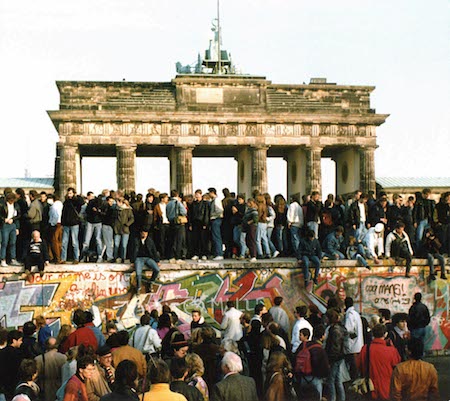
Communism in Eastern Europe "officially" fell with the Berlin wall in 1989.
Milestones in the History of U.S. Foreign Relations - Office of the Historian
history.state.gov 3.0 shell

Eurocommunism | Marxism, Socialism, Communism | Britannica
Eurocommunism, trend among European communist parties toward independence from Soviet Communist Party doctrine during the 1970s and ’80s. With Mikhail Gorbachev’s encouragement, all communist parties took independent courses in the late 1980s, and by 1990 the term Eurocommunism had become moot. The


Public Opinion in Europe 30 Years After the Fall of Communism | Pew Research Center
Thirty years ago, a wave of optimism swept across Europe as walls and regimes fell, and long-oppressed publics embraced open societies, open markets and a more united Europe. Three decades later, a new Pew Research Center survey finds that few people in the former Eastern Bloc regret the monumental changes of 1989-1991.
 Richard Wike
When asked about the shifts to multiparty democracy and a market economy that occurred following the collapse of communism, former Eastern Bloc publics surveyed largely approve of these changes. For instance, 85% of Poles support the shifts to both democracy and capitalism. However, support is not uniform – more than a third of Bulgarians and Ukrainians disapprove, as do roughly half in Russia.
Regardless of expressed opinions, the same human vices of deception and use of force remain, and the same or similar systems of government to those formerly known as communism once again come into being.
The fact that Russia and Europe have both had communist or Marxist systems of government does not mean they are friends.
"We have always been at war with Eastasia" in the words of George Orwell, and this history must be rewritten in a new and different narrative to match present alliances and political friendships.