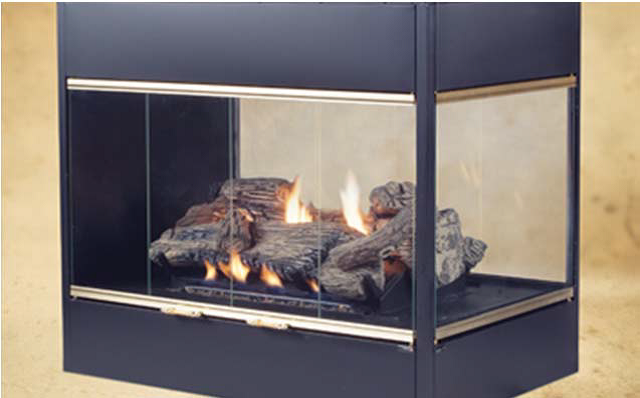
Houses with open “fireplaces”
Consumer products that are never actually used as such for the purported purpose in practice …
Many if not most houses constructed throughout the 20th century incorporated Rumford style fireplaces with brick chimneys. The design and construction of these is well documented by Vrest Orton, founder of the Vermont Country Store, in The Forgotten Art of Building a Good Fireplace, 2nd ed.,Yankee, New Hampshire, 1974. Orton was apparently admitted to the bar, but he did not practice law, and he and his wife Mildred were represented by a lawyer named Robert Ulrich, according to an interview published in the Vermont Bar Journal, Vol. 48, No. 3, Fall 2022.
One admonition that the good Count expressed would seldom obtain today. He cautioned against allowing women to march back and forth quickly in front of the fireplace, close to it. The clothes of the female, would, he states, be apt to cause eddies in the air by which puffs of smoke might easily be drawn into the room. I doubt if in our day women wear enough clothes to cause eddies. They may cause eddies — but not those that affect a fireplace.
It would appear from these final words of that book (as well as the title) that these “fireplaces” were never actually used without so-called “fireplace inserts” and even then, not much at all. The suggestions of female nudity, insubordinate servitude, and the drudgery or faggotry of cutting, splitting, stacking and hauling firewood, all seem to indicate that by the time of that late stage of that author’s life, city life had overtaken country living to the extent that people didn’t want to sully their hands anymore, as they all had college degrees and presumably white collar jobs or other sources of considerable income to pay for an exorbitant cost of urban living which was even then no longer obtainable by the sweat of one’s brow on the farm at any reasonable rate.
There is a very strange sense or feeling of abstract notions of “propriety” or “appropriateness” here alluding more precisely to “property” or “private property” which is really what it is without beating around the bush about it. Owners of houses or property often think there ought to be a decent fireplace in a home, and they don’t think they’re getting that from their servants or workers or contractors.


 BRENNEN JENSEN


The History of the Vermont Country Store:
Vrest Orton: ספרים
Including some untranslatable Hebrew found on Google.
 From the Author